Principles of Correction
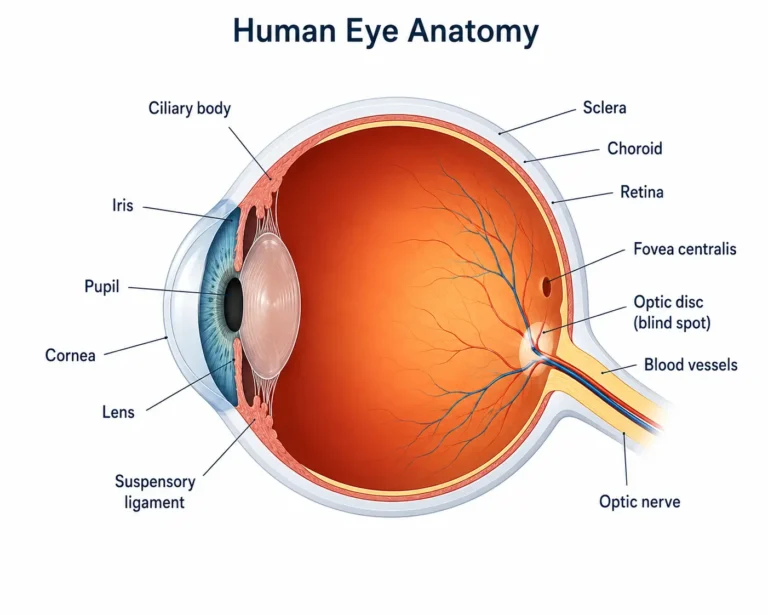
The human eye consists of a number of important structures required for clear vision. In a healthy eye, the main components of focusing light are the cornea and the lens, which focus light onto the retina at the back of the eye.
In a perfect eye, parallel light rays are focused to a single point on the retina. This requires the cornea and the lens to be crystal clear and the correct shape and power to match the length and shape of the eyeball. Any deviation from this ideal structure results in the need for glasses or contact lenses to correct vision.
Almost half the Australian population require glasses or contact lenses to improve their vision.
Understanding Refractive Errors
Myopia (short sightedness) and hyperopia (long sightedness) are the two main refractive errors in the Australian population. Myopia is where light focuses in front of the retina, and requires a negative power lens to correct vision. The reverse is true for hyperopia, where light focuses behind the retina and requires a positive power lens to correct vision.
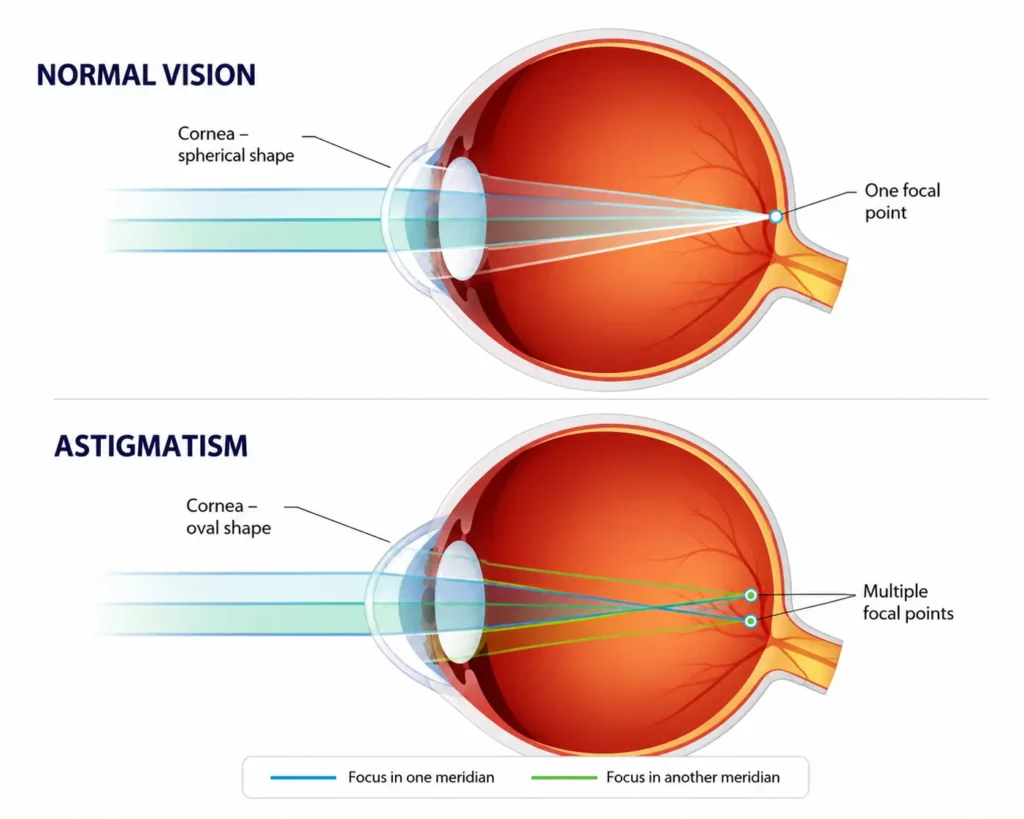
Astigmatism is less common and represents uneven focusing of light onto the retina. Imagine that the cornea is shaped like a rugby ball instead of a soccer ball, resulting in light at different points bending at variable angles. A more complex prescription is required to correct astigmatism.
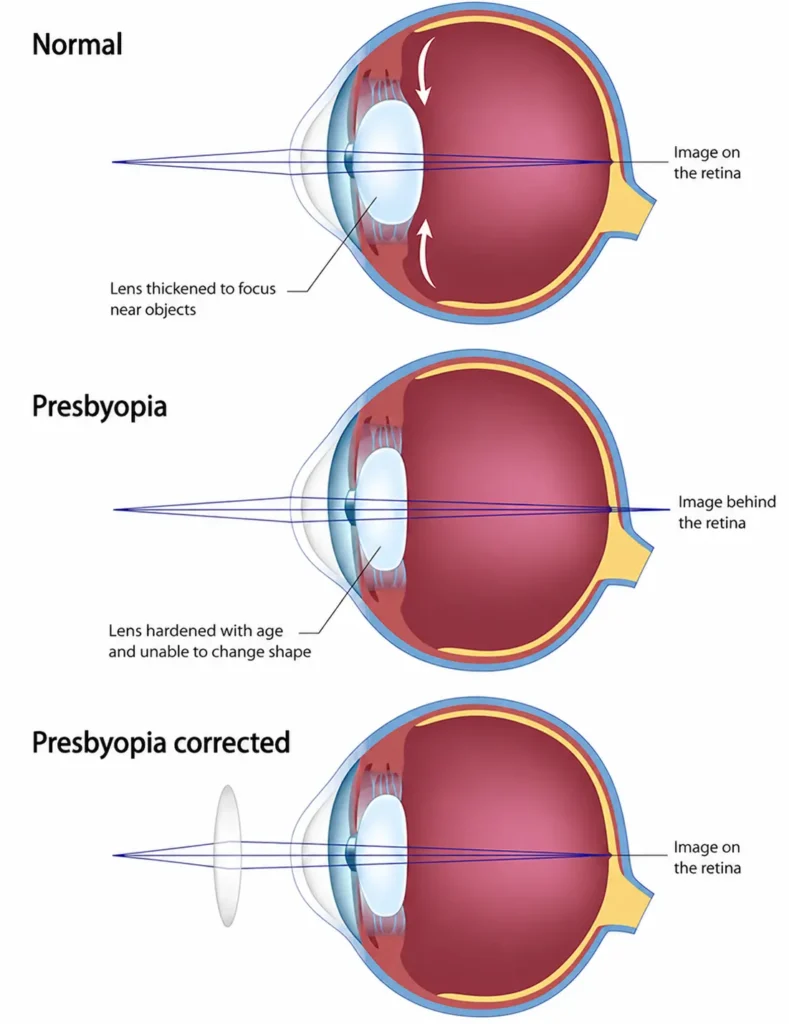
The human lens can change shape, allowing us to focus on objects in the distance and up close. With age, the human lens loses its flexibility and ability to change shape, resulting in difficulty with seeing near objects clearly. This is known as presbyopia. As a result, many people are forced to wear reading glasses.
Refractive Surgery Options
Refractive surgery is surgery to correct the refractive error of an eye. In other words, it is surgery to help people see without the need for glasses or contact lenses. In many, laser can be used to reshape the cornea to allow light to focus on the retina. In some, a lens may need to be inserted in the eye to focus the light correctly. In a smaller proportion of patients, a combination of the above is needed. A detailed and thorough examination is needed prior to determining the best option for your eye.
In general, patients should have a stable refraction (that is no change in glasses or contact lens prescription) for a minimum of two years. Laser surgery (LASIK or PRK) is best for low prescriptions, while high prescriptions may need a lens implantation method (RLE or ICL) to improve vision. Older patients, who have presbyopia, are better suited to RLE than laser eye surgery, especially if early cataract is detected. The table below is a basic summary as a guide.
Recommended Treatment by Age & Prescription
Choosing the right vision correction option depends on your age, prescription, lifestyle, and eye health. The table below provides a general guide to the most suitable treatment options for different vision needs.
| Age | Low Myopia (-1.00 to -3.00) | Moderate Myopia (-3.00 to -6.00) | High Myopia (-6.00 to -10.00) | Low Hyperopia (+1.00 to +4.00) | High Hyperopia (Above +4.00) |
| 21 – 50 | LASIK/PRK | LASIK | ICL | LASIK | ICL/RLE |
| 50 – 60 | LASIK/PRK | LASIK | RLE/ICL | RLE/LASIK | RLE |
| Over 60 | RLE | RLE | RLE | RLE | RLE |
Common Terms
- LASIK (Laser-Assisted In Situ Keratomileusis)
A laser vision correction procedure that reshapes the cornea to improve how light focuses on the retina, reducing or eliminating the need for glasses or contact lenses. - PRK (Photorefractive Keratectomy)
A laser eye surgery that reshapes the cornea to correct refractive errors. It is often recommended for patients with thinner corneas or certain eye conditions. - ICL (Implantable Collamer Lens)
A vision correction procedure where a specially designed lens is implanted inside the eye to correct moderate to high refractive errors without removing the natural lens. - RLE (Refractive Lens Exchange)
A procedure that replaces the eye’s natural lens with an artificial intraocular lens (IOL) to correct vision and reduce dependence on glasses, particularly for older adults or those with presbyopia.