
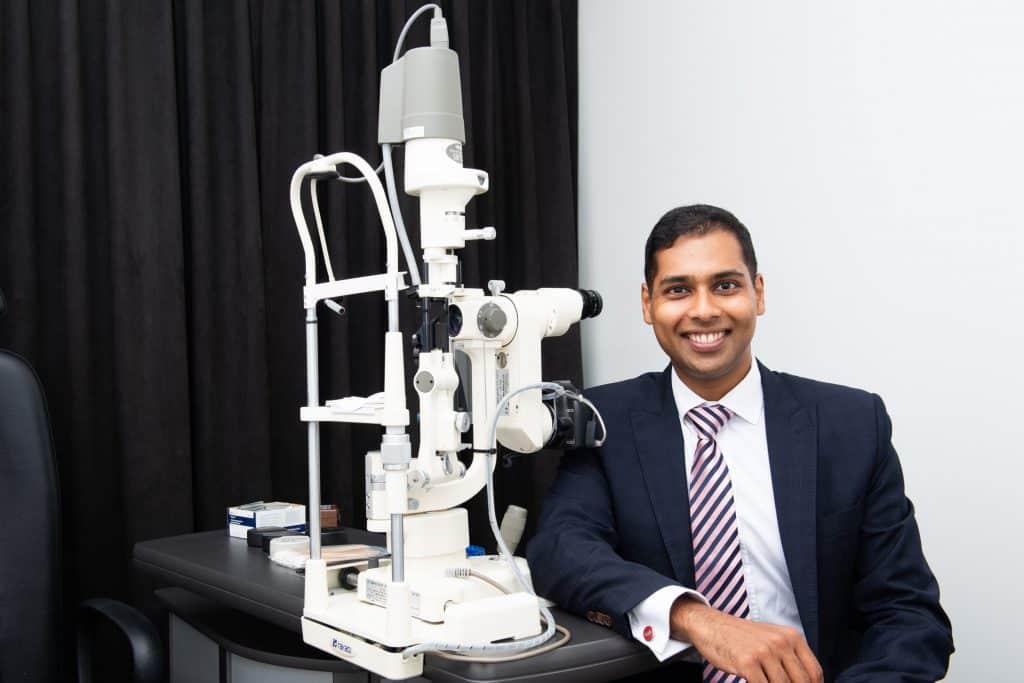
This article is based on research contributed to by Prof Chameen Samarawickrama, corneal specialist and refractive surgeon at Nexus Eye Care, Sydney.
Australian researchers are part of an international team developing an innovative synthetic gel that may help repair corneas damaged by injury or infection—potentially reducing the need for traditional transplant surgery.
Professor Chameen Samarawickrama, from University of Sydney Faculty of Medicine and Health and Westmead Institute for Medical Research, has contributed to the development and preclinical testing of LiQD Cornea—a novel adhesive liquid designed to restore corneal integrity.
The study, published in Science Advances, highlights a significant global challenge: while donor corneal transplantation remains the standard treatment for corneal blindness, limited availability of donor tissue has driven the need for alternative solutions.
Addressing Limitations of Current Treatments
Currently, corneal perforations caused by infection or inflammation are often treated using cyanoacrylate glue. However, this approach has limitations, including potential toxicity to surrounding tissue. In many cases, patients with severe corneal damage may currently require corneal transplant surgery
What Is LiQD Cornea?
LiQD Cornea is a cell-free, synthetic hydrogel designed to support corneal regeneration. It is composed of collagen-like peptides combined with polyethylene glycol and fibrinogen, allowing it to adhere effectively within corneal defects.
Once applied, the liquid rapidly transforms into a soft gel within approximately five minutes at body temperature. This property may allow treatment to be performed in outpatient settings rather than operating theatres, improving accessibility and reducing healthcare costs.
Promising Early Results
Preclinical studies, including trials conducted by Professor Samarawickrama and researcher Damien Hunter, have demonstrated encouraging outcomes—particularly in smaller corneal injuries.
The material behaves similarly to a dental filling: it is applied as a liquid, sets into a transparent gel, and integrates with the eye without causing significant scarring. Early findings also suggest it may support the eye’s natural healing processes.
Potential Advantages
- Transparent, gel-like structure that maintains visual clarity
- Reduced risk of immune rejection due to its synthetic composition
- Lower risk of disease transmission compared to donor tissue
- Potential for use outside of operating theatres
- Improved access to treatment, especially in resource-limited settings
Global Impact
Each year, approximately 4,300 Australians experience corneal injuries. The burden is even greater globally, particularly in developing regions where agricultural injuries are more common.
Innovations such as LiQD Cornea could significantly expand access to care and provide a viable alternative where donor tissue is unavailable.
Looking Ahead
While further studies are required to confirm safety and effectiveness in humans, early results are promising. The cornea’s avascular nature (lacking blood vessels) may improve the likelihood of successful outcomes across different populations.
If proven effective in clinical trials, LiQD Cornea has the potential to transform corneal care—offering a less invasive, more accessible treatment option for patients worldwide.