
Cataract and glaucoma are two of the most common eye conditions affecting adults, particularly as we age. Although they both impact vision and can lead to vision loss if untreated, cataract and glaucoma are very different conditions with distinct causes, symptoms, and treatments. Because they are often confused, understanding the key differences is essential for early diagnosis and proper care.
We believe informed patients are better equipped to protect their eye health. This guide explains how cataract and glaucoma differ, how they affect vision, and when to seek specialist care.
What Is a Cataract?
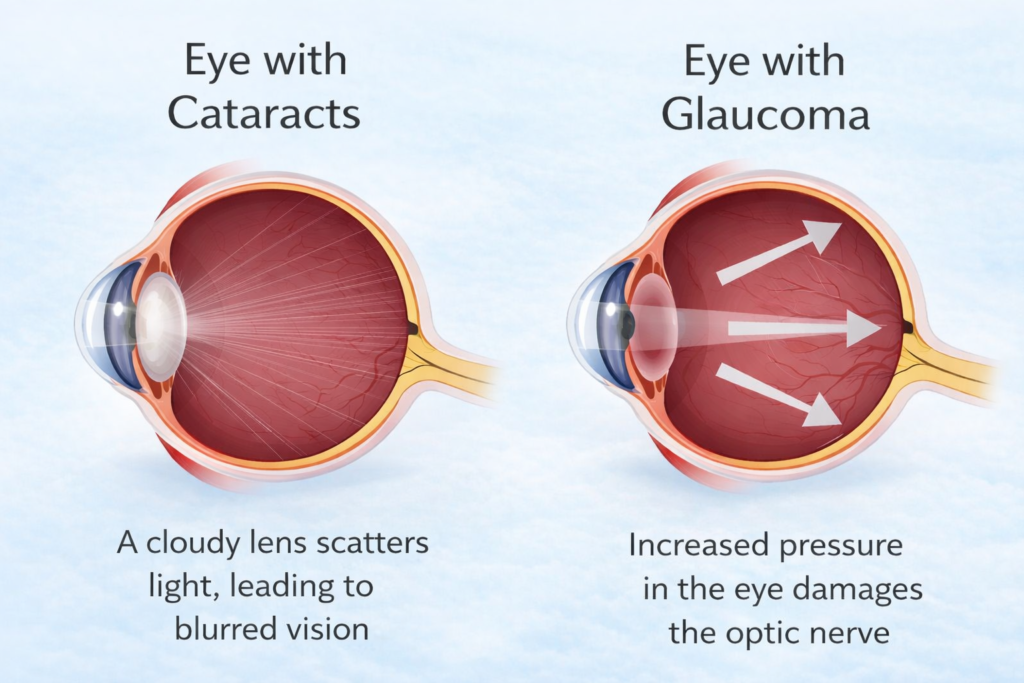
A cataract occurs when the eye’s natural lens becomes cloudy over time. The lens plays a crucial role in focusing light onto the retina, and when it loses its clarity, vision becomes blurred or hazy. Cataracts usually develop gradually and are most associated with ageing, although they can also be influenced by factors such as diabetes, long-term steroid use, eye injury, or excessive UV exposure.
As cataracts progress, everyday tasks like reading, driving, or recognising faces may become increasingly difficult. Colours may appear faded, and glare from lights, particularly at night, can become bothersome.
Common Symptoms of Cataracts
Cataract symptoms often develop slowly and may include:
- Blurry, cloudy, or foggy vision
- Increased sensitivity to light and glare
- Difficulty seeing at night
- Fading or yellowing of colours
- Frequent changes in glasses prescription
Because cataracts progress gradually, many people may not realise how much their vision has declined until it significantly interferes with daily life.
What Is Glaucoma?
Glaucoma is a group of eye conditions that damage the optic nerve, which is responsible for transmitting visual information from the eye to the brain. This damage is often associated with increased pressure inside the eye, known as intraocular pressure, although glaucoma can also occur with normal pressure levels.
Unlike cataracts, glaucoma typically causes irreversible vision loss. It often develops silently, with little or no early symptoms, which is why it is commonly referred to as the “silent thief of sight.
Common Symptoms of Glaucoma
The symptoms of glaucoma depend on the type and stage of the condition:
- Gradual loss of peripheral (side) vision
- Tunnel vision in advanced stages
- Blurred vision or halos around lights
- Eye pain or redness in acute cases
- Sudden vision loss in severe situations
Because early-stage glaucoma often causes no noticeable symptoms, regular eye examinations are critical for detection.
Key Differences Between Cataract and Glaucoma
Although cataract and glaucoma both affect vision, they differ in several important ways:
- Cause: Cataracts are caused by clouding of the eye’s lens, while glaucoma results from damage to the optic nerve, often due to increased eye pressure.
- Vision Loss: Cataract-related vision loss is usually reversible with treatment, whereas glaucoma-related vision loss is permanent.
- Progression: Cataracts typically progress slowly and predictably, while glaucoma can worsen without symptoms until significant damage has occurred.
- Pain: Cataracts are painless, while some forms of glaucoma may cause pain, redness, or nausea.
- Treatment Approach: Cataracts are treated with surgery, while glaucoma is managed with medications, laser procedures, or surgery to control eye pressure.
Understanding these differences helps patients recognise why early diagnosis and appropriate treatment are essential.
How Are Cataracts Treated?
Cataract treatment depends on how much the condition affects daily activities. In early stages, stronger lighting, updated glasses, or anti-glare lenses may help manage symptoms. However, cataracts cannot be reversed with medication.
When vision impairment begins to interfere with quality of life, cataract surgery is recommended. This procedure involves removing the cloudy lens and replacing it with a clear artificial intraocular lens. Cataract surgery is one of the most performed and successful procedures worldwide, with high rates of vision improvement.
How Is Glaucoma Treated?
Glaucoma treatment focuses on preventing further damage rather than restoring lost vision. The primary goal is to lower intraocular pressure and protect the optic nerve. Treatment options may include:
- Prescription eye drops to reduce eye pressure
- Laser treatments to improve fluid drainage
- Surgical procedures for advanced or resistant cases
Early detection and consistent treatment are critical to slowing or stopping glaucoma progression.
Can You Have Cataract and Glaucoma at the Same Time?
Yes, it is possible to have both conditions simultaneously, especially as they are both more common with increasing age. Managing patients with both cataract and glaucoma requires careful evaluation and a personalised treatment plan. In some cases, cataract surgery may help lower eye pressure, benefiting glaucoma management as well.
When Should You See an Eye Specialist?
You should seek professional care if you notice blurred vision, difficulty seeing at night, changes in peripheral vision, eye pain, or sudden vision changes. Even in the absence of symptoms, regular eye examinations are essential, particularly for individuals over 40 or those with risk factors such as diabetes or a family history of glaucoma.
Conclusion
While cataract and glaucoma are both serious eye conditions, they are fundamentally different in how they affect vision and how they are treated. Cataracts cause reversible clouding of the lens, while glaucoma leads to permanent optic nerve damage if left untreated.
Understanding these differences highlights the importance of regular eye checks and early intervention.
If you’re concerned about your vision or it’s time for an eye check, book a consultation —we’re here to help protect your sight.
Nice information. wish you good luck.